
Executive Summary
- Former U.S. Marine Raymond McLeod was captured in El Salvador after six years on the run.
- The victim’s mother, Josephine Wentzel, played a critical role in tracking McLeod through social media and geo-targeted ads.
- McLeod is charged with first-degree murder regarding the 2016 strangulation of Krystal Mitchell in San Diego.
- Defense attorneys have pleaded not guilty, arguing the death was accidental during consensual activity.
Raymond McLeod, a former U.S. Marine and one of the U.S. Marshals Service’s most wanted fugitives, has been apprehended in El Salvador after a six-year manhunt driven largely by the mother of his alleged victim. McLeod, 42, is accused of the June 2016 first-degree murder of Krystal Mitchell in San Diego. Authorities confirmed that McLeod was taken into custody in Sonsonate, El Salvador, where he had been working as an English teacher, and has since been returned to the United States to face trial.
Investigative Timeline and Allegations
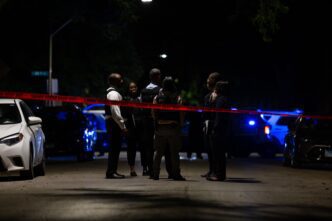
According to the San Diego County District Attorney’s Office, McLeod and Mitchell, 30, were visiting San Diego from Phoenix when the incident occurred. Court filings state that on June 10, 2016, Mitchell was found dead in the apartment where the couple was staying. A deputy medical examiner determined the cause of death was strangulation, noting the severity of the injuries was comparable to a significant blunt force trauma. Prosecutors allege McLeod fled the scene in Mitchell’s vehicle to the San Diego International Airport, rented a different car, and crossed the border into Mexico.
McLeod was identified as a person of interest almost immediately, and a warrant for his arrest was issued on June 13, 2016. Despite the involvement of the U.S. Marshals Service and a reward that eventually grew to $50,000, the trail went cold for extended periods. Officials stated his last known location prior to capture was in Guatemala in 2017.
Civilian-Led Search Efforts
Josephine Wentzel, Mitchell’s mother and a former police detective, spearheaded an independent investigation to locate her daughter’s alleged killer. According to interviews, Wentzel utilized social media to track McLeod’s movements across Central America, circulating “wanted” posters to businesses and communities in Belize, Guatemala, and El Salvador. Wentzel focused her efforts on a specific region near the El Salvador-Guatemala border after receiving new information.
The breakthrough reportedly came when Wentzel targeted Facebook advertisements to a 100-mile radius in that region. The U.S. Marshals Service confirmed that a tipster, who saw the information circulated by Wentzel, provided authorities with a brochure from a Salvadoran English school featuring a photograph of McLeod. This intelligence directly facilitated the operation in Sonsonate that led to his arrest.
Defense Arguments and Court Proceedings
Following his extradition to San Diego, McLeod entered a plea of not guilty to the charge of first-degree murder. His defense team has indicated in court filings that they intend to argue the death was accidental. Attorneys for McLeod stated the incident was a result of “rough, consensual sex gone wrong,” citing a history of specific sexual practices. The San Diego County District Attorney’s Office noted that McLeod had previously faced charges in Riverside County regarding alleged corporal injury to a spouse, though that case was not adjudicated before his disappearance.
Procedural Status and Judicial Context
The apprehension of Raymond McLeod marks a significant shift from an international fugitive investigation to active judicial proceedings within the Superior Court of California. This case highlights the complexities of cross-border law enforcement cooperation and the increasing role of digital intelligence in locating suspects who flee U.S. jurisdiction. As the case moves toward a preliminary hearing scheduled for March, the court will weigh the forensic evidence against the defense’s claims of accidental death. It is important to note that all individuals, including Raymond McLeod, are presumed innocent until proven guilty in a court of law.