Executive Summary
- The Democratic Party has moved the National Assembly plenary session to February 24 to forcefully process the “Judicial Three Laws.”
- The People Power Party has vowed to filibuster all unagreed-upon bills, condemning the schedule change as unilateral.
- Chief Justice Jo Hee-de warned that the proposed judicial reforms could alter the constitutional framework of the judiciary.
- The session will also address the Commercial Act revision and regional integration acts, though the Daejeon-South Chungcheong act has been paused.
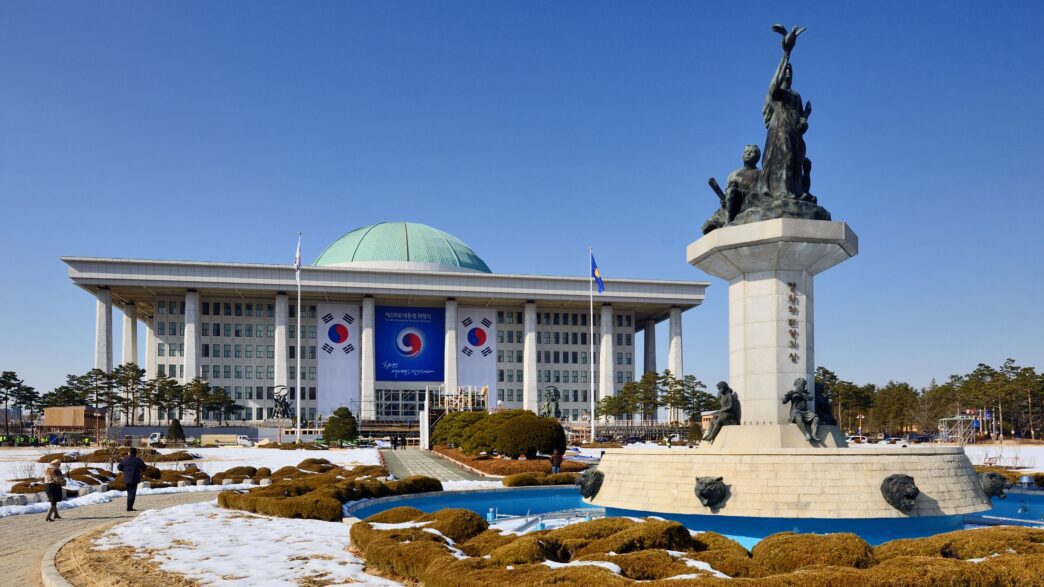
The Democratic Party of Korea is set to unilaterally process the so-called “Judicial Three Laws” and other contentious bills during a plenary session of the National Assembly scheduled for February 24, 2026. This move comes despite strong objections from the opposition People Power Party (PPP) and warnings of a filibuster, marking a significant escalation in legislative tensions.
According to reports, the Democratic Party successfully petitioned National Assembly Speaker Woo Won-shik to move the plenary session date forward from the originally agreed-upon date of February 26. The session is now expected to open on the 24th and last for eight days, concluding on March 3. The agenda includes the Judicial Three Laws—which introduce trial petitions, establish a crime of legal distortion, and increase judicial personnel—as well as the third revision of the Commercial Act, which mandates compulsory self-stock burning.
The acceleration of the legislative schedule has drawn sharp criticism from the People Power Party, which had advocated for processing only non-controversial bills on the originally scheduled date. In response to the Democratic Party’s refusal to delay, the PPP has announced plans to filibuster all unagreed-upon agenda items. Opposition lawmakers argue that the advancement of the session constitutes unilateral parliamentary management and violates previous bipartisan agreements.
Chief Justice Jo Hee-de has publicly expressed concerns regarding the Judicial Three Laws. In a statement to reporters, he noted that the bills “fundamentally alter the framework of the judicial system, which has been in place for nearly 80 years.” The Chief Justice emphasized that such significant changes could effectively constitute a constitutional amendment and advised that extensive deliberation involving public and expert opinions is necessary before passage.
In addition to the judicial reforms, the plenary session will address administrative integration acts for Gwangju-Jeonnam and Daegu-Gyeongbuk. However, the Daejeon-South Chungcheong Administrative Integration Special Act has been temporarily paused following regional backlash and opposition from local leaders, including Daejeon Mayor Lee Jang-u and South Chungcheong Governor Kim Tae-heum. While the integration initiative was reportedly raised by President Lee Jae-myung, the Democratic Party has opted to slow its progress to avoid further triggering regional dissent.
Legislative Implications
The Democratic Party’s decision to bypass bipartisan consensus and expedite the plenary session signals a deepening fracture in South Korea’s legislative governance. By prioritizing the immediate passage of the Judicial Three Laws despite the Chief Justice’s constitutional warnings, the ruling party risks triggering a protracted institutional conflict between the legislature and the judiciary. The anticipated filibuster by the People Power Party will likely stall proceedings, but the ultimate passage of these bills could lead to immediate legal challenges regarding their constitutionality and the separation of powers. This confrontation sets a volatile tone for the remainder of the February provisional session, potentially paralyzing cooperation on future economic and diplomatic legislative priorities.