
Executive Summary
- The Massachusetts State Police hired 21st Century Policing Solutions to review the handling of a fatal 2023 cruiser crash.
- Former MSP official Kathleen O’Toole is a partner at the firm but was explicitly excluded from the review team to ensure objectivity.
- The review follows allegations that Sgt. Scott Quigley was intoxicated during the crash that killed Angelo Schettino.
- Delayed disclosure of the allegations has paused a separate murder trial investigated by Quigley.
The Massachusetts State Police (MSP) have retained the consulting firm 21st Century Policing Solutions to conduct an independent review of the agency’s handling of a fatal 2023 cruiser crash, addressing concerns regarding a partner at the firm who previously held a high-ranking position within the MSP. The inquiry focuses on administrative procedures following the collision, which has sparked allegations of internal cover-ups and delayed justice.
MSP spokesperson Tim McGuirk clarified that while Kathleen O’Toole, a former MSP lieutenant colonel and Boston Police Commissioner, is a partner at the consulting firm, she will not participate in the audit. According to a letter from State Police Colonel Geoffrey Noble, the review will be executed by investigators Tim Mygatt, Matthew Barge, and Annette Sandberg. McGuirk stated that these individuals were selected for their collective experience in Department of Justice civil rights work and compliance assessments, emphasizing the agency’s desire for an “objective, evidence-informed evaluation.”
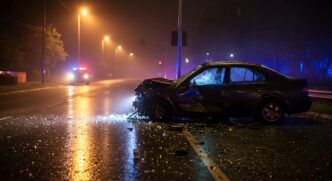
The external review was commissioned after allegations surfaced that Sgt. Scott Quigley, the trooper involved in the incident, was intoxicated at the time of the crash. A wrongful death lawsuit filed by the family of the victim alleges that Quigley had a blood alcohol level of .114—well above the legal limit of .08—when he crossed into oncoming traffic in Woburn, striking a wheelchair van head-on. The collision resulted in injuries to 37-year-old Angelo Schettino, a passenger in the van, who died in the hospital one month later.
Despite the severity of the crash, police reports indicate that Quigley was initially cited only for a marked lanes violation. The Middlesex District Attorney’s Office reported that they were not informed of the impairment allegations until January 2026, more than two years after the event. This delay has disrupted judicial proceedings, specifically pausing the first-degree murder trial of the Phan brothers, a case in which Quigley served as a homicide investigator. Consequently, the Middlesex DA has referred the matter to the Suffolk District Attorney to evaluate potential criminal charges against Quigley.
Operational records and footage have further complicated the agency’s position. According to dash cam and body camera footage obtained by local media, the investigating officer, Sgt. Jennifer Penton, was reportedly instructed by a superior not to interview Quigley on the night of the accident. In the footage, Penton expresses frustration regarding the directive, suggesting that higher-ranking officers were protecting Quigley. Penton is currently suspended without pay and faces separate manslaughter charges related to the 2024 death of an academy trainee.
It is important to note that all individuals, including Sgt. Scott Quigley and Sgt. Jennifer Penton, are presumed innocent until proven guilty in a court of law.
Institutional Oversight and Accountability
The engagement of an external firm highlights the significant pressure on the Massachusetts State Police to restore public trust following allegations of preferential treatment within its ranks. The scope of the inquiry—specifically the internal policies regarding notification, supervisor response, and documentation—suggests a systemic examination of the agency’s command structure rather than a singular disciplinary action. By explicitly excluding former MSP official Kathleen O’Toole from the investigative team, the agency attempts to preempt claims of bias; however, the ultimate efficacy of this review will depend on its ability to produce transparent, actionable reforms to the internal culture that allegedly permitted a two-year delay in accountability.