
Executive Summary
- Closing arguments are set for Wednesday in the trial of former Uvalde officer Adrian Gonzales.
- Gonzales faces 29 counts of child abandonment or endangerment for his response to the 2022 shooting.
- Prosecutors argue Gonzales abandoned his training, while the defense claims he did not see the gunman.
- The case is a rare instance of an officer facing criminal charges for failing to act during a shooting.
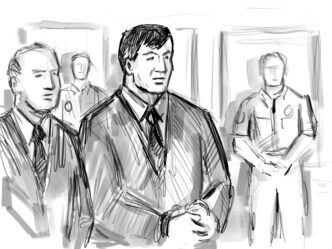
The trial of former Uvalde school police officer Adrian Gonzales, accused of failing to intervene during the deadly 2022 attack at Robb Elementary School, is scheduled to proceed to closing arguments on Wednesday in Corpus Christi, Texas. Jurors are expected to hear final statements from defense attorneys and state prosecutors before beginning deliberations in a case that examines the legal responsibilities of law enforcement during active shooter incidents.
Gonzales, one of the first officers to arrive at the scene, has pleaded not guilty to 29 counts of child abandonment or endangerment related to the 19 students killed and 10 wounded in the massacre. According to court records, the former officer faces a maximum sentence of two years in jail if convicted. The defense rested its case on Tuesday without Gonzales taking the stand.
Special prosecutor Bill Turner emphasized the critical nature of the timeline during proceedings on Tuesday. “Every second counts in an active shooter situation,” Turner stated, arguing that delays in intervention can lead to further loss of life. Prosecutors called 36 witnesses over nine days, alleging that Gonzales, a 10-year veteran who had previously led active shooter training, abandoned his protocols and waited three minutes before entering the building.
Defense attorneys presented two witnesses to counter the state’s narrative. One witness, a woman who worked across the street from the school, testified that she saw the shooter ducking between cars to stay out of view. This testimony was introduced to support Gonzales’ assertion that he never saw the gunman. His legal team maintains that he did not freeze during the chaos and noted that three other officers on the opposite side of the school also saw the gunman outside but did not discharge their weapons.
The proceedings have been emotionally charged, featuring testimony from teachers who survived the attack and graphic photographic evidence from inside the classrooms. The trial was moved hundreds of miles to Corpus Christi after a judge ruled that Gonzales could not receive a fair trial in Uvalde. Gonzales is one of only two officers criminally charged in connection with the delayed response, the other being former Uvalde schools police chief Pete Arredondo.
Judicial Implications
This trial represents a significant test of legal standards regarding law enforcement accountability during mass casualty events. The prosecution of an officer for inaction, rather than the use of excessive force, is historically rare in the United States criminal justice system. A verdict in this case could establish a precedent regarding the criminal liability of police officers who fail to engage an active threat. The outcome may also influence the pending legal proceedings against former Chief Pete Arredondo, who was indicted on similar charges. It is important to note that all individuals are presumed innocent until proven guilty in a court of law.