Executive Summary
- FBI agents testified that Judge Dugan ordered them to the Chief Judge’s office, disrupting a planned arrest.
- The intervention caused the federal team to split up, allowing the suspect to flee the building before being caught outside.
- Witnesses described Judge Dugan as “angry” and “stern” during the 19-second hallway encounter.
- Defense attorneys argued the judge was following courthouse protocol by directing agents to administration.
- The suspect, Eduardo Flores-Ruiz, had a history of deportation and domestic abuse charges.
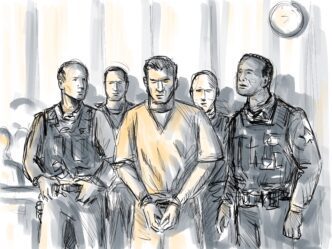
Federal agents testified in court on Tuesday that Milwaukee County Judge Hannah Dugan disrupted a planned immigration arrest by ordering officers to the chief judge’s office, a directive that allegedly caused a chaotic scramble to apprehend the suspect outside the courthouse. The testimony was provided during the second day of Judge Dugan’s federal trial, where she faces charges related to interfering with the attempted arrest of Eduardo Flores-Ruiz, an undocumented immigrant with a history of domestic abuse charges.
According to testimony from Special Agent Baker, the operation was compromised when Judge Dugan approached the federal team in the hallway outside her courtroom at 8:43 a.m. Baker told jurors that Dugan asked the agents their purpose before ordering them to report to Chief Judge Carl Ashley. Baker stated that the team had never encountered a situation where they were sent to a judge’s office during an operation, leading to significant confusion among the six-member arrest team.
FBI Special Agent Philip Jackling testified that the judge appeared “upset” and “angry” during the brief interaction. Jackling told the court that he interpreted Dugan’s statement as a direct order rather than a request. As a result of the directive, the team split up, with four agents proceeding to the chief judge’s vestibule. This fragmentation of the team allowed the target, Flores-Ruiz, to exit the courtroom through a different door and leave the building. Jackling described chasing Flores-Ruiz through traffic on 10th Street before eventually apprehending him.
The prosecution presented additional testimony from Judge Kristela Cervera, who was present during the incident. Judge Cervera testified that she was “shocked” to learn of the FBI investigation into her colleague. She described being summoned by Dugan via an urgent gesture, stating, “I thought something bad had happened.” While Cervera noted that Dugan could have been “a little more diplomatic,” she acknowledged that a judicial warrant was necessary for the arrest. Cervera also recalled Dugan remarking the following Monday that “she was in the doghouse” with the chief judge.
Defense attorneys sought to challenge the agents’ accounts by highlighting courthouse protocols regarding the chief judge’s authority. They also questioned the agents’ use of Signal, an encrypted messaging app, to coordinate the operation, presenting screenshots of unprofessional profile pictures used by the agents. Despite the defense’s arguments, ICE deportation officer Joseph Vasconcellos testified that courthouse arrests are typically prioritized for safety reasons, noting that Milwaukee County does not honor ICE detainers, making public areas of the courthouse a necessary venue for such operations.
Judicial Authority and Federal Jurisdiction
The trial of Judge Dugan highlights the complex and often contentious intersection between local judicial authority and federal immigration enforcement operations within state facilities. The proceedings underscore the friction that can arise when federal mandates clash with local courthouse administration and protocols. The outcome of this case may establish critical legal precedents regarding the extent of a judge’s authority to manage their immediate environment versus the authority of federal agents executing arrest warrants. It is important to note that Judge Dugan is presumed innocent of all charges until proven guilty in a court of law.