
Executive Summary
- Internal dissent has emerged within ICE regarding the fatal shooting of Renee Good, with agents questioning the necessity of lethal force.
- Video evidence reportedly contradicts the DHS claim that the vehicle was weaponized against Agent Jonathan Ross.
- Agents criticized the deployment of Enforcement and Removal Operations officers to investigate complex financial fraud without adequate training.
- Concerns were raised regarding the reduction of federal training programs from 13 weeks to six weeks to meet recruitment quotas.
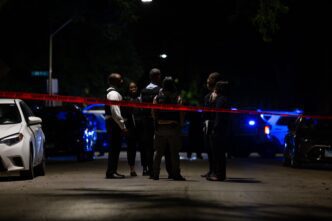
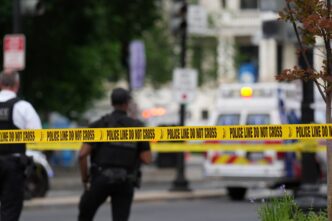
Current and former U.S. Immigration and Customs Enforcement (ICE) agents are expressing concerns regarding the fatal shooting of Renee Good in Minneapolis, questioning the official justification provided by the Department of Homeland Security (DHS) and the operational readiness of deployed personnel. The incident, involving Agent Jonathan Ross, has sparked internal dissent within the agency amid a broader crackdown on immigration and financial fraud in the region initiated by the Trump administration.
According to DHS statements, Agent Ross acted in self-defense, alleging that Good had “weaponized her vehicle” in an attempt to run over officers. However, video footage of the incident reportedly contradicts this account, showing Agent Ross positioned to the side of the vehicle with the wheels turned away from him when he fired the three fatal shots. Speaking on condition of anonymity to TIME, a current ICE agent with over 20 years of experience described the shooting as “very problematic,” noting that while policy allows firing on a vehicle if there is imminent danger, the visual evidence suggests otherwise.
The shooting occurred during a surge in federal presence in the Twin Cities, where the Trump administration has deployed approximately 2,000 ICE agents to investigate alleged daycare fraud. Agents expressed frustration over this assignment, noting that Enforcement and Removal Operations (ERO) officers are trained for deportation logistics, not the complex financial investigations usually handled by Homeland Security Investigations (HSI). One current agent stated that the deployment prioritized flooding the area with personnel rather than utilizing officers with the requisite skill sets.
The incident has also drawn attention to the agency’s aggressive recruitment and training protocols. To meet President Trump’s goal of conducting the “largest deportation operation in American history,” ICE has reportedly shortened its training program at the Federal Law Enforcement Training Center from 13 weeks to six weeks. A former ICE agent described this reduction as a “recipe for disaster,” warning that rushing recruits through legal and enforcement training creates liability risks and places inexperienced officers in volatile situations. Both current and former agents suggested that Agent Ross’s reaction might have been influenced by a previous injury involving a vehicle months prior.
Operational Oversight and Training Protocols
This incident highlights critical questions regarding the intersection of rapid law enforcement expansion and operational safety standards. The deployment of agents to specialized financial investigations without commensurate training, coupled with a significant reduction in academy duration, presents potential liability and safety risks for both the public and the officers. Furthermore, the discrepancy between official accounts and video evidence in the use-of-force incident is likely to prompt a rigorous review of engagement protocols and officer fitness. As the investigation into the shooting of Renee Good proceeds, it is important to note that all individuals involved, including law enforcement personnel, are presumed innocent of criminal misconduct until proven guilty in a court of law.