
Executive Summary
- Officials from five Mississippi counties participated in a joint active shooter drill in Natchez.
- The exercise included a mock press conference to test law enforcement’s public information management.
- Emergency coordinators conducted an after-action assessment to identify gaps in regional response protocols.
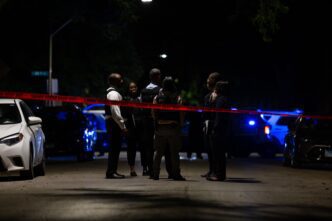
Emergency management officials and law enforcement agencies from five Mississippi counties convened in Natchez on Thursday to conduct a high-intensity active shooter drill aimed at testing regional response capabilities and coordination. The exercise, centered around a simulated attack at King’s Cabinet Food Pantry on Liberty Road, involved approximately 40 officials from Adams, Franklin, Wilkinson, Jefferson, and Amite counties.
According to Mattie Powell of the Wilkinson County Emergency Management Agency, who coordinated the event, the drill was designed to identify operational gaps and refine protocols for potential real-world scenarios. “We are about to hold an after event assessment to discuss how it went and see what holes we need to fill in case we are ever faced with the real thing,” Powell stated, noting that the preliminary execution of the exercise appeared successful.
Adams County Emergency Management Agency Director Robert Bradford stated that the simulation was designed to ensure realism, incorporating a mock press briefing where Adams County Sheriff Travis Patten and Natchez Police Chief Caroline Green addressed media inquiries. This component tested the command staff’s ability to manage public information strategies under pressure. Representatives from Merit Health Natchez and the American Red Cross also participated to simulate the broader medical and humanitarian response required during mass casualty events.
Operational Readiness Assessment
The collaboration between multiple county jurisdictions highlights the increasing emphasis on regional interoperability during critical incidents. By integrating medical response and public information management into tactical drills, agencies aim to mitigate the logistical confusion often associated with the initial stages of active shooter situations. Such multi-agency exercises are essential for validating communication lines across distinct radio networks and establishing unified command structures prior to an actual emergency.