Executive Summary
- South Carolina and Wyoming are the only US states without statewide hate crime legislation.
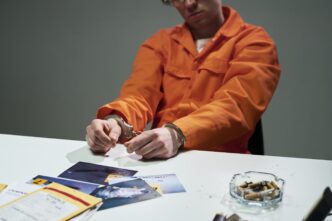
- An FBI arrest of a Pickens County man has reignited calls for state lawmakers to act.
- Advocates argue the lack of a specific law prevents accurate tracking of bias-motivated crimes.
- Legislators have failed to pass a hate crime bill since proposals began in 1996.
South Carolina legislators are facing renewed calls to enact statewide hate crime legislation following the recent arrest of a Pickens County man by the Federal Bureau of Investigation (FBI) for alleged online threats. South Carolina remains one of only two states in the nation, alongside Wyoming, that has not passed a specific hate crime statute, a gap that advocates argue limits the state’s ability to track and prosecute bias-motivated offenses effectively.
Courtney Tessler, leader of the Jewish Federation of Upstate SC, stated that the absence of state-level legislation creates significant challenges in tracking criminal trends. According to Tessler, incidents that might otherwise be classified as hate crimes are often prosecuted under general statutes such as vandalism. “If someone were to defile a public space with anti-Semitic or other hate type of speech, there’s no prosecution for that. Therefore, there’s no tracking,” Tessler noted.
The Anti-Defamation League has reported a rise in anti-Semitic attacks in recent years. While federal data is available for cases involving the FBI, state-level data remains incomplete due to the legislative void. Tessler emphasized that while her organization relies on the Secure Community Network nonprofit to monitor threats, the lack of state recognition limits the scope of actionable data.
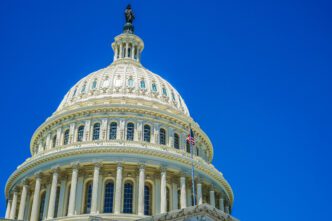
In response to the legislative stalemate, more than two dozen municipalities, including Spartanburg, have enacted local ordinances adding penalties for crimes motivated by race, religion, or gender. However, Tessler pointed out that these local measures are limited in scope compared to a potential statewide law. Since 1996, South Carolina lawmakers have proposed at least one hate crime bill during every legislative session, yet none have passed both chambers. The current legislative session is set to continue on January 13, with two hate crime bills potentially up for consideration.
Legislative Implications
The continued absence of a state hate crime law in South Carolina necessitates a reliance on federal intervention for severe bias-motivated cases, potentially creating jurisdictional gaps for lower-level offenses. Without a unified state statute, prosecutors lack specific sentencing enhancements that exist in 48 other states, and law enforcement agencies face hurdles in standardizing data collection regarding hate groups. As the legislative session resumes, the intersection of federal enforcement and local advocacy may intensify pressure on lawmakers to address this longstanding policy outlier. It is important to note that the individual arrested in Pickens County is presumed innocent until proven guilty in a court of law.