
Executive Summary
- Reports of armed individuals and screams at the College of San Mateo triggered a major police response Tuesday.
- Responding officers discovered an unannounced training exercise involving outside agencies and the EMT program.
- San Mateo Police confirmed they were not notified of the drill, leading to the false active shooter alarm.
- No injuries were reported, and authorities verified there was no actual threat to the campus.
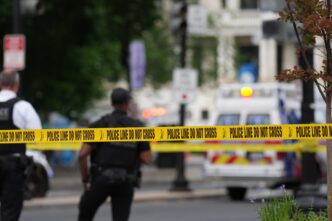
A surprise law enforcement training exercise conducted without prior notification at the College of San Mateo sparked panic and a significant emergency response late Tuesday afternoon, leading to false reports of an active shooter. According to the San Mateo Police Department, authorities rushed to the scene following distress calls regarding armed individuals, only to discover a scheduled drill involving outside agencies.
Between 5:15 p.m. and 5:20 p.m., witnesses reported seeing armed subjects and hearing screams near Building 12 on the campus. In response to the potential threat, the San Mateo County Community College District Public Safety Department and the San Mateo Police Department dispatched officers to the location in force. Upon arrival, responding units determined that outside law enforcement agencies were conducting a training simulation with the college’s emergency medical technician program.
San Mateo Police officials stated that the confusion arose from a breakdown in communication protocols. “Appropriate notifications had not been made and our agency was not made aware of outside agencies using the campus for training,” the department noted in an official advisory. Authorities confirmed that while the incident caused alarm, there were no injuries and no actual threat to the public.
Operational Protocol Analysis
This incident underscores the critical necessity of inter-agency communication regarding tactical drills in public spaces. Unannounced exercises mimicking active shooter scenarios carry significant risks, including the potential for “blue-on-blue” incidents where responding officers might mistake role-players for genuine threats. While the San Mateo Police Department emphasized their readiness by noting they “responded in force and took appropriate actions immediately,” the event serves as a procedural case study on the importance of notifying local jurisdiction dispatch centers to prevent public panic and resource misallocation during training operations.