Executive Summary
- House Bill 4433 passed the West Virginia House 88-9, establishing felony penalties for human smuggling.
- The legislation redefines smuggling to include transporting or harboring undocumented immigrants to evade police.
- Exemptions were included for medical providers and attorneys representing undocumented clients.
- Critics argued the bill could penalize charitable groups and conflicts with federal immigration laws.
The West Virginia House of Delegates overwhelmingly passed House Bill 4433 on Tuesday, a measure designed to increase penalties for human trafficking and human smuggling within the state. The legislation, which expands the legal definitions of trafficking, smuggling, and forced labor, establishes specific felony penalties for the illegal transport of adults and minors.
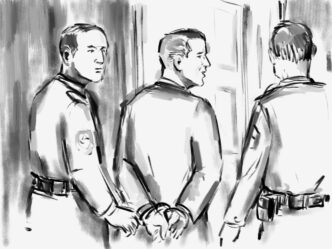
The bill passed by a vote of 88-9, with opposition coming entirely from the House Democratic caucus. Under the provisions of the bill, West Virginia’s definition of human smuggling would be revised to include the acts of transporting, isolating, or harboring an individual with undocumented status for the purpose of evading law enforcement.
Delegate J.B. Akers (R-Kanawha), a co-sponsor of the legislation, stated that the bill aims to protect victims and deter criminal activity. According to Akers, the legislation is narrowly tailored to avoid criminalizing humanitarian aid. “The only way you will ever have any criminal culpability under this bill for human smuggling is if you know that the person has illegal status in this country, and if the entire purpose of your assistance to that person is to help them evade law enforcement,” Akers told the assembly.
Opposition members voiced concerns regarding the bill’s potential impact on charitable organizations and religious groups. House Minority Leader Sean Hornbuckle (D-Cabell) argued that the legislation creates conflicting state and federal standards and is overly broad. “It targets and captures the innocent, not just those with ill intent,” Hornbuckle stated, suggesting the law could penalize Good Samaritans providing basic assistance, such as transportation to a grocery store.
Prior to the final vote, the House rejected an amendment proposed by Delegate Kayla Young (D-Kanawha) that sought to require proof of financial or material benefit for a smuggling conviction. However, the final version of the bill includes exemptions for individuals providing medical or mental health services, as well as for licensed attorneys representing undocumented individuals in legal matters.
Legislative and Legal Implications
The passage of House Bill 4433 marks another attempt by the House to codify stricter immigration-related enforcement at the state level, a move that parallels similar efforts in other jurisdictions. While the measure now advances to the Senate, previous versions of this legislation have stalled in that chamber. The specific inclusion of exemptions for legal and medical professionals appears to be a legislative strategy to insulate the statute from potential constitutional challenges, though the tension between state police powers and federal immigration supremacy remains a central point of legal debate.