
Executive Summary
- Families of two Trinidadian men filed a wrongful death lawsuit against the U.S. government over a military strike in the Caribbean.
- The Trump administration labeled the targets as “narcoterrorists,” while the families claim the men were civilian laborers.
- The lawsuit challenges the administration’s claim that a state of “armed conflict” exists with drug cartels.
- Legal representation includes the ACLU and the Center for Constitutional Rights.
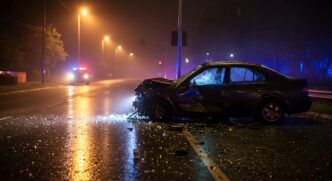
WASHINGTON — Family members of two Trinidadian men killed in a U.S. military strike on a vessel in the Caribbean have filed a wrongful death lawsuit against the United States government. The complaint, filed in federal court on Tuesday, marks the first legal challenge of its kind against the Trump administration regarding its military campaign against alleged drug-smuggling vessels in the region.
The lawsuit alleges that Chad Joseph, 26, and Rishi Samaroo, 41, were killed on October 14 while traveling by boat from Venezuela to Trinidad. According to the filing, the plaintiffs contend that the strike constituted an extrajudicial killing. Defense Secretary Pete Hegseth and President Trump previously stated that the strike neutralized six individuals described as “narcoterrorists” affiliated with a designated terrorist organization involved in narcotics trafficking.
Attorneys from the American Civil Liberties Union (ACLU) and the Center for Constitutional Rights, who represent the families, argue that Joseph and Samaroo were civilians returning home after working in Venezuela. The complaint asserts that Joseph, a father of three, and Samaroo, a construction worker, had no links to illegal activities. The filing cites the Trinidadian government, which reportedly stated it has no information connecting the men to drug trafficking or weapons possession.
The lawsuit challenges the legal framework used by the Trump administration to justify the use of lethal force. Administration officials have informed Congress that the U.S. is engaged in a non-international armed conflict with drug cartels, thereby invoking laws of war. The plaintiffs argue that no such armed conflict exists, rendering the use of lethal force unjustified. The suit alleges violations of the Death on the High Seas Act and the Alien Tort Statute.
According to the Department of Defense, the October 14 incident was the fifth strike in a broader campaign that has targeted dozens of boats since September. The lawsuit claims the families were not notified of the deaths by U.S. officials and only learned of the incident through other means. The plaintiffs are seeking accountability and truth regarding the circumstances of the strike.
Legal and Geopolitical Ramifications
This lawsuit presents a significant test for the scope of executive power regarding military operations conducted under the guise of counter-narcotics efforts. By invoking the Alien Tort Statute, the plaintiffs are challenging the classification of drug interdiction operations as an “armed conflict,” a definition that currently permits the use of lethal force under international rules of engagement. The outcome of this case could establish critical legal precedents determining whether military engagements against non-state actors in international waters are subject to federal judicial review. It is important to note that while the deceased were characterized by administration officials as being affiliated with criminal organizations, all individuals are presumed innocent until proven guilty in a court of law.