Executive Summary
- Anti-Trump Republicans remain divided on whether to reform the GOP or support Democrats in upcoming elections.
- Attendees at the Principles First summit disagreed on the viability of Secretary of State Marco Rubio as a 2028 candidate.
- High-profile critics like George Conway and Geoff Duncan have formally switched to the Democratic Party.
- White House and RNC officials dismissed the summit attendees as lacking political relevance.
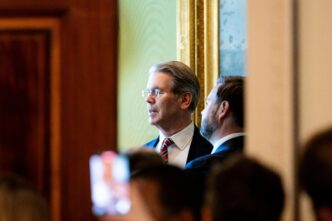
OXON HILL, Md. — A prominent coalition of anti-Trump Republicans gathered near Washington this weekend for the annual Principles First summit, revealing deep strategic fractures within the movement following President Donald Trump’s decisive victory in the 2024 election. The conference highlighted the existential crisis facing critics of the administration, as attendees debated whether to continue fighting for the soul of the Republican Party or to permanently align themselves with the Democratic opposition.
The summit, held at a convention center along the Potomac River, served as a counter-programming effort to the pro-Trump Conservative Political Action Conference (CPAC). However, interviews with attendees indicated a lack of consensus on the path forward. While former Mayor John Giles of Mesa, Arizona, expressed despair over the lack of pushback within the GOP, former Representative Barbara Comstock of Virginia argued that the Republican Party must suffer significant electoral defeats in the 2026 midterms to diminish the influence of the MAGA movement.
Disagreements over potential 2028 presidential contenders further illustrated the schism. Former North Carolina Governor Pat McCrory and former Senator Jeff Flake voiced support for Secretary of State Marco Rubio as a potential bridge back to traditional conservatism. In contrast, former New Jersey Governor Chris Christie and Ms. Comstock dismissed Rubio, suggesting he had prioritized his political standing over principled opposition. Christie indicated an openness to supporting a Democratic candidate in 2028, specifically praising former Chicago Mayor Rahm Emanuel.
The movement’s dwindling influence within the GOP apparatus was underscored by the recent defections of several high-profile figures. Former Congressman George T. Conway III and former Georgia Lieutenant Governor Geoff Duncan have both recently joined the Democratic Party, with Duncan launching a gubernatorial bid under his new affiliation. Olivia Troye, a former adviser to Vice President Mike Pence, stated that there is “no room” for critics within the current Republican structure.
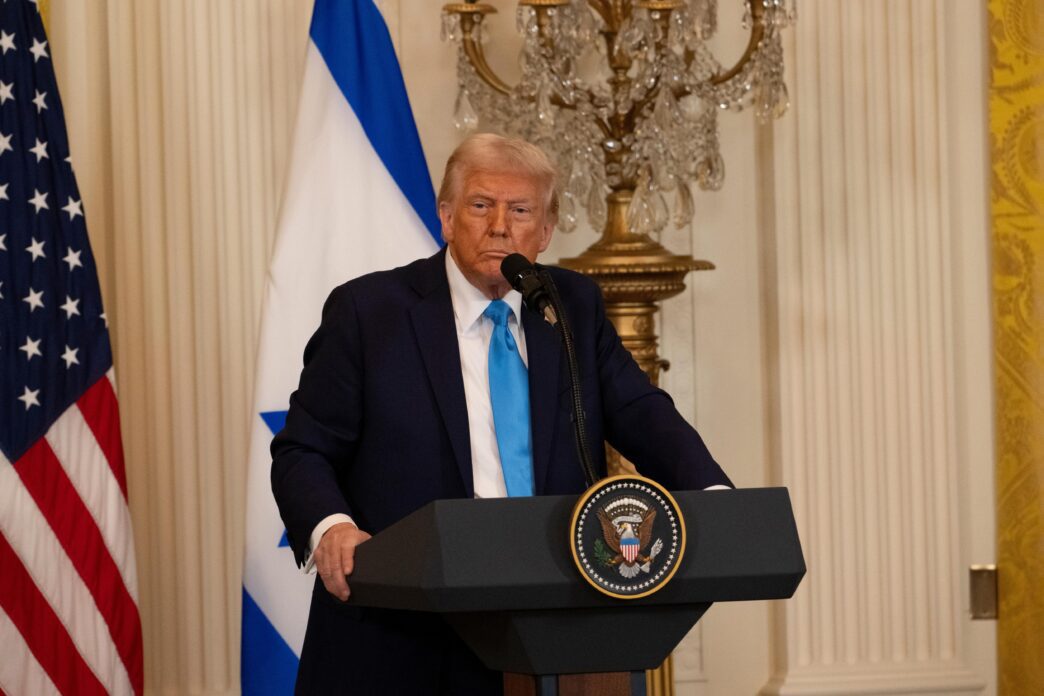
In response to the gathering, Abigail Jackson, a spokeswoman for the White House, characterized the event as a collection of “has-been politicians.” Similarly, the Republican National Committee dismissed the convention’s credibility. Despite the external criticism and internal division, former RNC Chairman Michael Steele affirmed his commitment to remaining within the party to contest its current direction.
Political Realignment
The fracturing of the “Never Trump” coalition suggests a significant consolidation of the Republican Party around President Trump’s populist platform, leaving traditional conservatives with limited options. As prominent dissenters increasingly migrate toward the Democratic Party or exit politics entirely, the GOP is likely to see a reinforcement of its current ideological trajectory leading into the 2026 midterms. This realignment poses a long-term challenge for the two-party system, potentially shifting the Democratic coalition further toward the center-right as it absorbs disaffected Republicans, while the GOP solidifies a more homogenous base.