Executive Summary
- The U.S. Supreme Court struck down specific Trump administration tariffs, prompting a global reassessment of trade strategies.
- President Donald Trump responded immediately with a new executive order imposing a 15% tariff on affected goods.
- French President Emmanuel Macron praised the judicial check on power but warned of continued adaptation to new U.S. measures.
- European officials are calling for the refund of an estimated $118 billion in excess tariffs paid by German companies alone.
- Business leaders along the U.S.-Mexico border cite regulatory uncertainty as a primary obstacle to investment and operations.
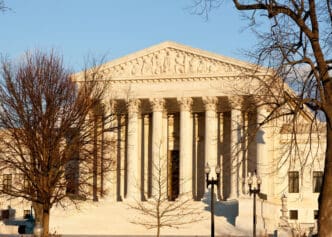
Governments and major corporations worldwide moved urgently on Saturday to assess the economic fallout after the U.S. Supreme Court struck down specific global tariffs implemented by the Trump administration, a ruling that was immediately met with new executive countermeasures. The judicial decision marks a significant escalation in the ongoing struggle over United States trade policy, disrupting established supply chains and prompting emergency meetings from Seoul to Mexico City.
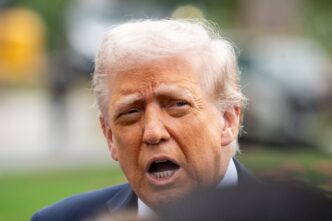
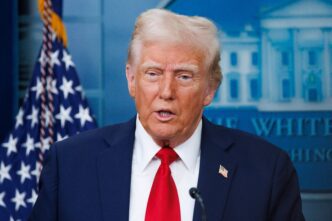
Following the court’s decision, South Korea’s Trade Ministry convened an emergency session to navigate the altered trade landscape. While exports such as automobiles and steel remain unaffected by the ruling, other sectors face renewed volatility. In response to the Supreme Court’s action, President Donald Trump signed an executive order on Friday imposing a new 10% tariff on affected goods. By Saturday morning, President Trump announced that this rate would be increased to 15%, signaling a continued commitment to protectionist trade measures despite judicial pushback.
French President Emmanuel Macron, speaking at an agricultural fair in Paris, acknowledged the decision as a victory for the "rule of law" and the democratic system of checks and balances. However, Macron urged caution rather than triumphalism, noting President Trump’s rapid move to rework the measures. "I note that President Trump, a few hours ago, said he had reworked some measures to introduce new tariffs, more limited ones, but applying to everyone," Macron stated. "So we’ll look closely at the exact consequences, what can be done, and we will adapt."
In North America, the economic uncertainty is particularly acute along the U.S.-Mexico border. Mexican Economy Secretary Marcelo Ebrard stated that Mexico is observing the situation with a "cool head," emphasizing that 85% of Mexican exports remain tariff-free under the United States-Mexico-Canada Agreement (USMCA). However, business leaders express growing fatigue over regulatory unpredictability. Alan Russell, CEO of Tecma, a firm assisting American businesses in Mexico, described "uncertainty" as the greatest challenge for cross-border operations. "The difficult part has been not being clear what the rules are today or what they’re going to be tomorrow," Russell said.
The ruling has also opened the door for complex financial disputes regarding tariff refunds. Bernd Lange, chairman of the European Parliament’s trade committee, argued that excess tariffs paid by European entities "must be refunded," estimating that German companies and their importers may have overpaid by more than 100 billion euros ($118 billion). Similarly, Swissmem, representing Switzerland’s tech industry, welcomed the court’s decision but noted that high tariffs have already severely damaged the sector, with exports to the U.S. falling 18% in the fourth quarter.
Global Economic Implications
The collision between the judiciary and the executive branch regarding trade policy introduces a profound layer of complexity to the global economic outlook. While the Supreme Court’s ruling reinforces constitutional limits on executive overreach, the administration’s rapid deployment of alternative tariff mechanisms suggests that trade volatility will persist. This dynamic complicates long-term capital allocation for multinational corporations, who must now navigate not only market forces but also a fluctuating legal framework. The potential for large-scale litigation over tariff refunds adds further uncertainty to fiscal planning for both the U.S. Treasury and international trading partners.