
Executive Summary
- Rainbow Coalition Strategy: Jackson pioneered a “radically inclusive” political model uniting diverse economic and racial groups, influencing modern Democratic strategy.
- Electoral Impact: Voter mobilization efforts driven by Jackson in the 1980s were credited with helping Democrats retake the Senate in 1986.
- Policy Vanguard: Jackson was an early national advocate for LGBTQ+ rights and Palestinian statehood, introducing these topics to the Democratic platform decades before they became mainstream.
Reverend Jesse Jackson, the prominent civil rights leader and former presidential candidate who died on February 17, leaves behind a political legacy that fundamentally reshaped the Democratic Party’s approach to coalition building. According to historians and political analysts, Jackson’s formation of the National Rainbow Coalition in the wake of his 1984 presidential campaign established a framework for modern progressive politics by centering marginalized communities in the national discourse.
Charles McKinney, a professor of history at Rhodes College, characterized Jackson’s political strategy as “radically inclusive.” McKinney noted that Jackson sought to bridge divides between the working class, the elite, and the middle class, creating a platform that transcended traditional demographic lines. This “capacious” vision, considered transgressive four decades ago, laid the groundwork for contemporary political movements led by figures such as Barack Obama and Bernie Sanders.
Jackson’s organizing roots, stemming from his time as a lieutenant to Martin Luther King Jr. in the Southern Christian Leadership Conference (SCLC), heavily influenced his economic focus. Steven Lawson, a history professor at Rutgers, highlighted Jackson’s leadership of Operation Breadbasket in Chicago, which utilized boycotts to improve economic conditions. Lawson observed that Jackson ensured the civil rights movement evolved into the 1970s with a distinct focus on economic equity, transitioning from protest to political power.
During the 1980s, Jackson identified a shift to the right within the Democratic Party and sought to counter it by mobilizing a “multiracial, cross-class coalition,” according to Lawson. This strategy proved electorally significant. Kevin K. Gaines, a professor of civil rights at the University of Virginia, attributed the Democratic recapture of the Senate in 1986 partly to the “Jesse Jackson effect,” which drove a surge in Black voter registration and turnout, particularly in the American South.
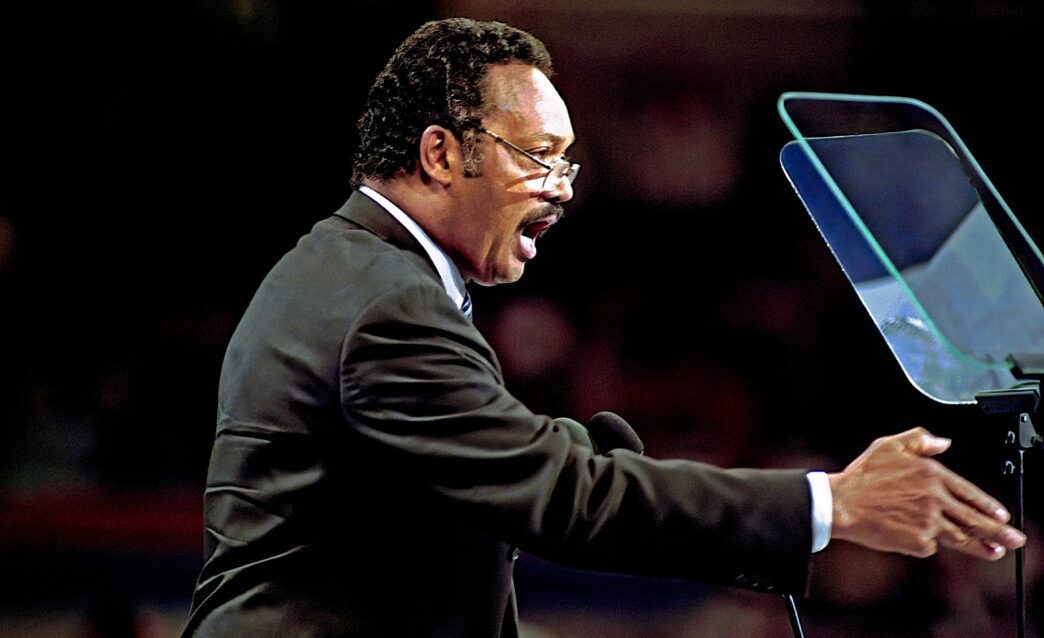
Jackson was also an early proponent of LGBTQ+ rights within the national political arena. In his 1984 Democratic National Convention speech, he famously declared that the “rainbow includes lesbians and gays,” marking a significant departure from the political norms of the era. Additionally, Jackson’s campaigns broke ground on foreign policy; he was the first major candidate to include an Arab American committee and pushed for a Democratic platform plank supporting Palestinian statehood and self-determination, a stance McKinney noted was taken long before it entered the mainstream.
Societal & Political Impact Assessment
The operational legacy of Jesse Jackson’s political career extends beyond his specific policy proposals to the structural composition of the modern Democratic Party. By demonstrating the electoral viability of a coalition comprised of racial minorities, working-class voters, and progressive whites, Jackson provided the demographic blueprint currently utilized by Democratic strategists. Furthermore, his early integration of issues such as LGBTQ+ rights and Middle East policy into the national platform accelerated the normalization of these topics within mainstream political debate. His career marks a critical historical pivot where civil rights activism was successfully transmuted into institutional political influence, altering the governance landscape for subsequent generations.