Executive Summary
- Supreme Court Ruling: The Court voted 6-3 to strike down President Trump’s use of emergency powers for tariffs, deeming it unconstitutional.
- Business Impact: Kevin O’Leary reports immediate instability, with lenders and shareholders demanding capital returns amidst compliance confusion.
- Refund Uncertainty: The ruling lacked guidance on how businesses can recover funds, despite reports that U.S. entities bore 90% of the costs.
- Executive Response: President Trump criticized the majority opinion and signed a new executive order for a universal 10% tariff.
Investor Kevin O’Leary has characterized the aftermath of the Supreme Court’s recent ruling on executive tariff powers as a logistic and financial “nightmare” for American business owners. In an interview with CNN, O’Leary described the immediate confusion facing the private sector following the high court’s 6-3 decision to block President Trump from utilizing the International Emergency Economic Powers Act (IEEPA) to implement sweeping import taxes.
The Supreme Court found that the administration’s reliance on emergency powers to levy these tariffs was unconstitutional, effectively striking down the measures. O’Leary noted that the ruling has triggered a wave of demands from lenders and shareholders seeking the return of capital previously allocated for tariff compliance. “The Supreme Court, they’ve caused a nightmare here,” O’Leary stated, adding that his own office has been inundated with inquiries regarding asset recovery.
Compounding the uncertainty, the Court’s decision did not provide specific guidance to lower courts regarding the process for tariff refunds. This lack of clarity has left businesses without a roadmap for recouping costs. A report from the Federal Reserve Bank of New York indicated that U.S. businesses and consumers absorbed approximately 90 percent of the costs associated with the tariffs. In anticipation of the ruling, hundreds of corporations had already filed lawsuits seeking restitution.
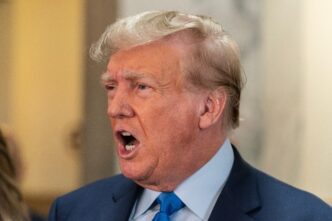
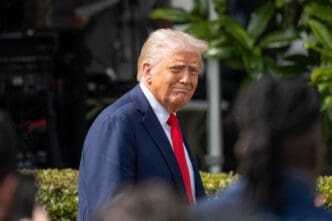
The ruling has also ignited significant political friction. President Trump publicly criticized Justices Neil Gorsuch and Amy Coney Barrett, both of whom he appointed, for joining the majority opinion against the administration’s use of IEEPA. Conversely, the President praised the dissenting opinion filed by Justices Brett Kavanaugh, Samuel Alito, and Clarence Thomas. Following the decision, President Trump announced the signing of a new executive order imposing a 10 percent tariff on imports globally.
Economic and Legal Implications
The Supreme Court’s intervention represents a significant check on executive authority regarding trade policy and the use of national emergency declarations for economic leverage. While the ruling reasserts Congressional oversight, the immediate lack of a refund mechanism creates a period of intense volatility for supply chains and corporate balance sheets. Furthermore, the administration’s pivot to a new universal tariff via executive order suggests a continued executive commitment to protectionist trade policies, likely setting the stage for subsequent legal challenges regarding the scope of presidential economic powers.