Executive Summary
- 60% of Americans approve of the Supreme Court’s decision to block the emergency tariffs, while 23% disapprove.
- Economic concerns are high, with 66% of respondents stating prices increased either “a lot” or “slightly” under the policies.
- Partisan divides remain, though 30% of Republicans broke with the party line to approve of the Court’s ruling.
- President Trump has already pivoted to Section 122 of the 1974 Trade Act to implement a new 10% global tariff.
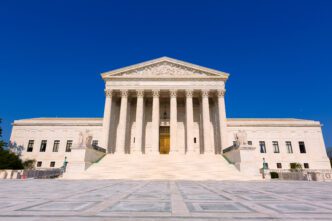
A significant majority of Americans approve of the Supreme Court’s recent decision to block President Donald Trump’s implementation of sweeping emergency tariffs, according to a new survey conducted by YouGov. The poll indicates that the public largely aligns with the high court’s 6-3 ruling, which curtailed the executive branch’s use of the International Emergency Economic Powers Act (IEEPA) to impose trade levies.
The data, released on Friday, reveals that 60 percent of U.S. adults either “strongly” or “somewhat” approve of the judicial intervention. Conversely, 23 percent of respondents expressed disapproval of the ruling, while 17 percent remained unsure. The decision has elicited a polarized response along partisan lines, though support for the court’s move crosses into independent voters. According to the survey, 88 percent of Democrats and 63 percent of independents support the ruling. Republican respondents were more divided, with 43 percent disapproving and 30 percent signaling approval.
Public perception of the tariffs’ economic impact appears to be a driving factor in these results. The poll found that 41 percent of respondents believe consumer prices “increased a lot” under the administration’s trade policies, with an additional 25 percent reporting that costs increased “slightly.” Only a fraction of those surveyed—less than 1 percent—believed the tariffs led to price decreases. The Supreme Court’s decision specifically targeted the use of a 50-year-old national emergency law to regulate imports, with Chief Justice John Roberts writing in the majority opinion that the statute did not authorize the President’s broad import tax agenda.
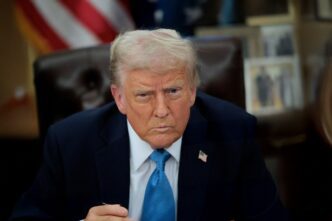
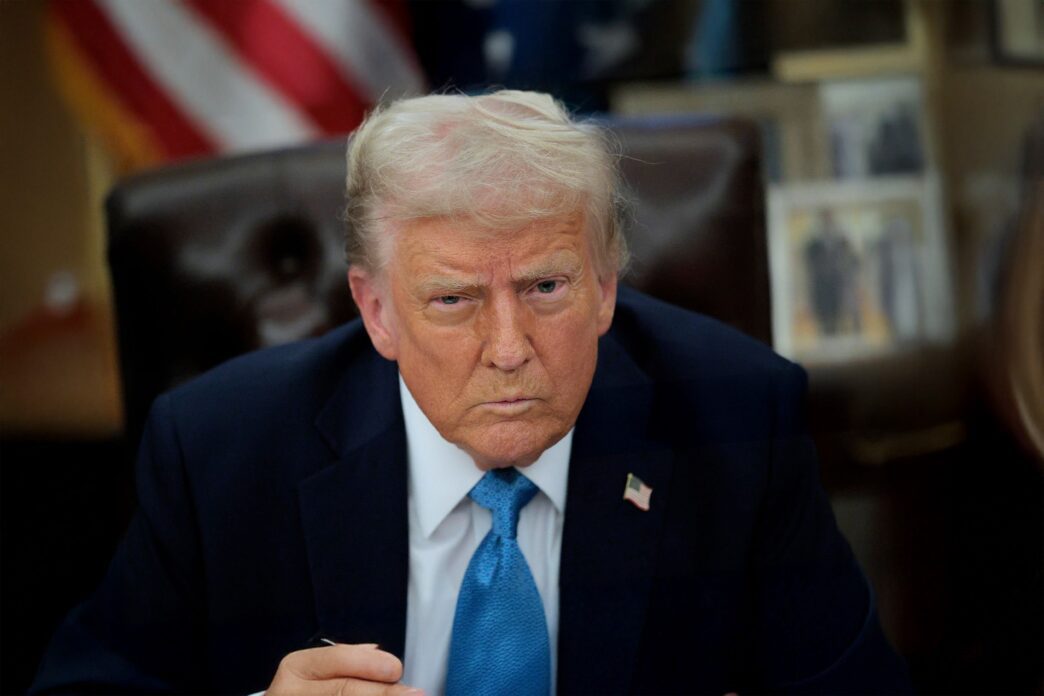
Following the ruling, President Trump expressed disappointment, specifically criticizing Justices Amy Coney Barrett and Neil Gorsuch—both of whom he appointed—for siding with the majority. Despite the legal setback, the administration has moved quickly to pivot its strategy. President Trump announced the signing of a new executive order imposing a 10 percent tariff on global imports, citing Section 122 of the 1974 Trade Act. This provision allows for temporary tariffs to address serious balance-of-payments deficits.
Economic and Political Implications
The alignment of public sentiment with the Supreme Court’s ruling suggests a growing voter sensitivity to inflationary pressures and the costs associated with aggressive protectionist trade policies. While the ruling serves as a significant check on executive authority regarding the IEEPA, the administration’s immediate pivot to Section 122 indicates a continued commitment to a tariff-heavy economic strategy. This creates a complex landscape for the administration, which must navigate potential legal challenges to the new order while addressing voter concerns about the cost of living. Furthermore, the potential for up to $175 billion in tariff refunds, as estimated by the Penn Wharton Budget Model, introduces a substantial fiscal variable that lower courts will now have to adjudicate.