Executive Summary
- Electoral Shift: Unlike the 2024 cycle, 2026 is seeing a decrease in the efficacy of pro-Israel lobbying groups in Democratic primaries.
- New Jersey Case Study: AIPAC’s campaign against centrist Tom Malinowski reportedly backfired, resulting in a victory for progressive critic Analilia Mejia.
- Policy Evolution: Conditioning military aid to Israel is moving from a taboo subject to a mainstream position within the Democratic Party.
- Generational Divide: A distinct split is emerging between veteran lawmakers and younger Democrats regarding unconditional support for the Israeli government.
WASHINGTON – A significant shift in the longstanding relationship between the Democratic Party and the American Israel Public Affairs Committee (AIPAC) is reportedly accelerating in 2026, marked by changing electoral dynamics and a growing willingness among lawmakers to condition military aid. Following a period of dominance by pro-Israel political action committees in the 2024 cycle, recent developments suggest a fracturing of the traditional bipartisan consensus, highlighted by a contentious special election in New Jersey.
According to political analysts, the influence of groups like the Democratic Majority for Israel (DMFI) and AIPAC—which successfully campaigned against progressive incumbents such as Jamaal Bowman and Cori Bush in 2024—is facing increased resistance. Observers note that the 2026 political landscape has evolved, with a growing number of Democratic officials, including Senators like Andy Kim of New Jersey, expressing support for a two-state solution while maintaining open criticism of the Netanyahu government.
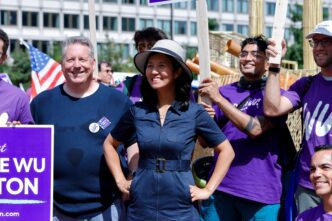
The changing dynamic was illustrated in a recent New Jersey special election. Reports indicate that AIPAC invested approximately $2 million to oppose former Congressman Tom Malinowski, a centrist Democrat who had expressed support for placing conditions on aid to Israel. The lobbying effort, intended to unseat Malinowski, reportedly backfired by splitting the moderate vote and paving the way for the primary victory of Analilia Mejia, a progressive organizer critical of Israel’s military conduct.
In an interview with Politico regarding the election, Malinowski criticized the lobbying group’s strategy. “They are now demanding 100 percent fealty,” Malinowski stated. “On some level, they may have preferred to elect an anti-Israel progressive versus a mainstream Democrat, who departs from their hard line in a small way.” This sentiment reflects a broader trend where conditioning military aid, once considered a fringe position, is increasingly entering the Democratic mainstream.
The shift is further driven by the ongoing humanitarian situation in Gaza. Reports cited by the publication estimate the death toll at 60,000, a figure that has deepened the generational divide within the party. Analysts suggest that while veteran Democrats remain aligned with traditional pro-Israel stances, younger cohorts and incoming candidates are adopting more critical perspectives, viewing unconditional support as politically untenable.
Political Strategic Assessment
The fracturing of the Democratic Party’s alignment with AIPAC signals a potential long-term realignment in U.S. foreign policy advocacy. The unintended consequences of recent lobbying efforts in New Jersey suggest that aggressive primary interventions against centrist candidates may yield diminishing returns for pro-Israel groups, potentially accelerating the rise of progressive critics. If this trend continues through the 2026 midterms and into the 2028 cycle, the bipartisan consensus on unconditional military aid to Israel may face significant legislative challenges, forcing a reevaluation of lobbying strategies within Washington.