Executive Summary
- The Supreme Court will hear oral arguments in United States v. Hemani on March 2 regarding the federal gun ban for marijuana users.
- The central legal challenge focuses on whether the term "unlawful user" is unconstitutionally vague under the Due Process Clause.
- Federal circuit courts are currently split on defining the threshold of drug use that disqualifies citizens from gun ownership.
- The Trump administration argues the ban is constitutional, interpreting "unlawful user" as "habitual" and citing historical analogues.
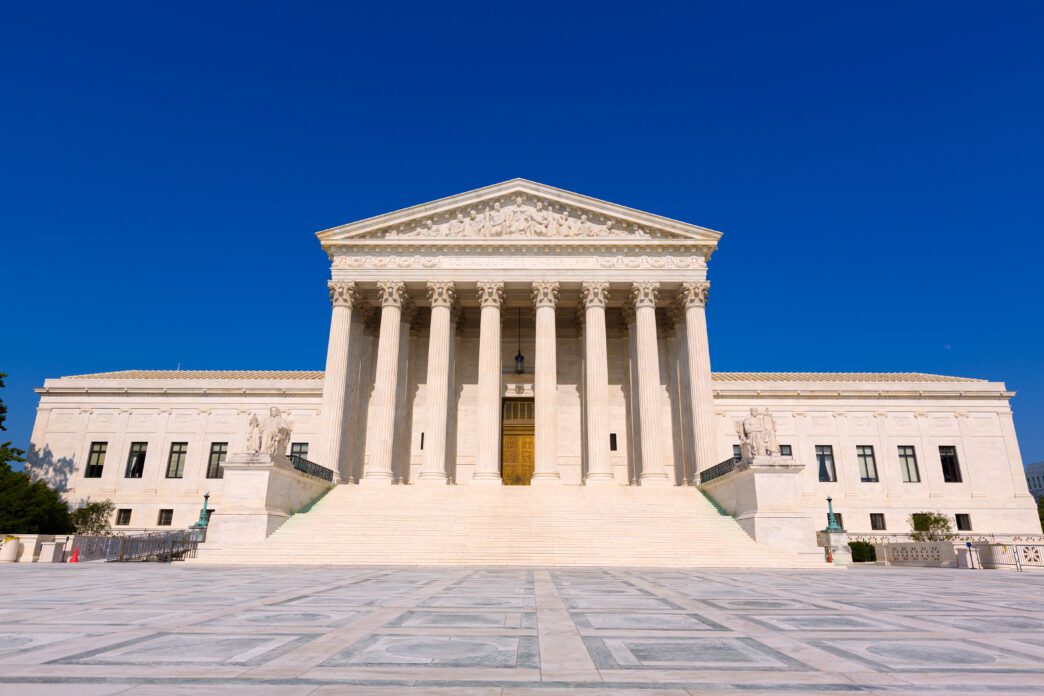
WASHINGTON – The Supreme Court is scheduled to hear oral arguments on March 2 in United States v. Hemani, a significant Second Amendment case that will determine whether the federal government can constitutionally prohibit "unlawful users" of controlled substances, specifically marijuana, from possessing firearms. The case represents the second major gun rights challenge of the Court's current term and is expected to further test the legal framework established in recent precedents regarding firearm regulations.
At the center of the dispute is a federal statute that criminalizes gun possession for any "unlawful user" of a controlled substance. Legal analysts note that the core conflict involves defining the scope of the Second Amendment against the Due Process Clause's prohibition on vague criminal laws. Defense attorneys for Ali Hemani argue that the federal statute fails to provide a clear standard for what constitutes an "unlawful user," potentially criminalizing a wide range of behavior from one-time use to habitual consumption without sufficient notice to citizens.
Federal appeals courts have issued divergent rulings on this issue, creating a split that the Supreme Court is now poised to resolve. According to legal filings, the US Court of Appeals for the Third Circuit has previously ruled that occasional drug use does not automatically disqualify an individual from gun ownership, stating that "use of drugs with some regularity is required." Conversely, the Sixth Circuit has required evidence of "prolonged" use, while the Eighth Circuit has held that prosecutors need only show drug use occurred during the same general period as gun possession.
The administration of President Trump has filed a brief urging the justices to uphold the federal ban. The administration argues that the term "unlawful user" should be interpreted to mean "habitual drug users," drawing a historical analogy to early American laws that restricted firearm access for "habitual drunkards." This argument attempts to align the restriction with the Court's 2022 decision in New York State Rifle & Pistol Association v. Bruen, which requires modern gun laws to have a historical analogue to survive constitutional scrutiny.
Legal experts suggest the Court may bypass the complex historical analysis required by Bruen and instead rule on the "vagueness" doctrine. If the Court finds the statutory definition of "unlawful user" to be unconstitutionally vague, it could strike down the application of the law without necessarily expanding or contracting the Second Amendment's scope. Such a ruling would address the concerns raised regarding fair notice under criminal law.
Judicial and Legislative Implications
The outcome of United States v. Hemani will likely have profound implications for the intersection of drug policy and constitutional rights. A ruling striking down the ban could force Congress to redraft federal firearm restrictions with greater specificity, particularly as state-level marijuana legalization continues to expand, creating friction with federal prohibition. Furthermore, the decision will serve as a litmus test for the durability of the Bruen framework; if the Court opts to resolve the case on due process grounds rather than historical Second Amendment analysis, it may signal a judicial hesitation to further complicate the "history and tradition" test that lower courts have struggled to apply consistently. It is important to note that while this case challenges the constitutionality of a statute, the specific proceedings involve criminal allegations, and the accused is presumed innocent until proven guilty in a court of law.